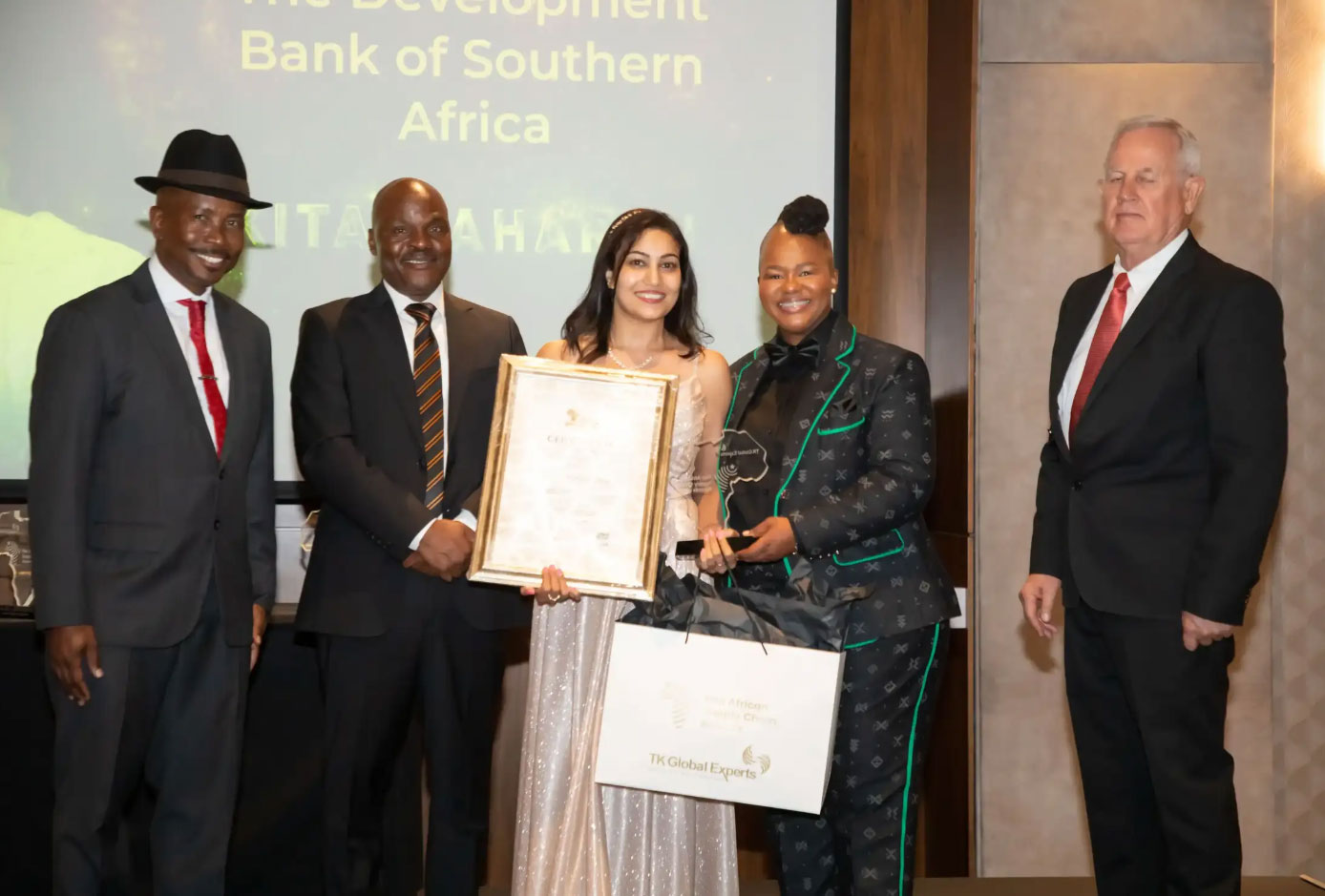

- Please introduce yourself and tell us about your role at DBSA.
My name is Nikita Maharaj, and I am a Public Procurement Governance and Compliance Specialist at the Development Bank of Southern Africa (DBSA). In this role, I am responsible for shaping and strengthening the governance, risk management, compliance, and strategic enablement functions that underpin the Bank’s procurement operations.
My work focuses on ensuring that procurement is not only compliant and efficient but also serves as a strategic enabler of infrastructure delivery, economic transformation, and sustainable development. I lead initiatives related to policy development, procurement governance, supplier performance management, risk oversight, and supplier development, while providing advisory support to executive leadership on procurement and transformation strategies.
What motivates me most is the opportunity to use procurement as a catalyst for inclusive economic growth. Through well-designed procurement and supplier development programmes, we can create meaningful opportunities for emerging businesses, strengthen local industries, and contribute to long-term socioeconomic development across the African continent.
- What inspired your journey in procurement, supplier development, and economic transformation?
My journey into procurement began with an interest in how organisations create value through strategic decision-making. However, it was my exposure to supplier development and economic transformation that truly ignited my passion for the profession.
Early in my career, I recognised that procurement is far more than a transactional function. It is one of the most powerful instruments available to influence economic outcomes, create opportunities, and support the growth of businesses that might otherwise struggle to participate in mainstream markets. Having worked in development finance institutions and the public sector, I have witnessed firsthand how purposeful procurement can unlock opportunities for entrepreneurs, create jobs, and support inclusive growth.
What continues to inspire me is seeing emerging businesses evolve into sustainable enterprises. When suppliers develop new capabilities, secure larger opportunities, expand their workforce, and contribute to their communities, procurement moves beyond compliance and becomes a vehicle for genuine economic transformation.
- You have been recognised with the Best Supplier Development Project Award. What does this achievement mean to you personally and professionally?
Receiving the Best Supplier Development Project Award is both humbling and rewarding. Personally, it represents the culmination of years of dedication to advancing procurement as a strategic tool for empowerment, transformation, and sustainable economic development.
Professionally, the award affirms my belief that supplier development can deliver meaningful and measurable impact when it is approached strategically rather than as a compliance exercise. It demonstrates that organisations can simultaneously achieve strong governance outcomes, commercial objectives, and transformational impact.
Importantly, I view this recognition as a shared achievement. Effective supplier development requires collaboration between procurement professionals, business leaders, suppliers, regulators, and development partners. The award reflects the collective commitment of all stakeholders who contributed to creating opportunities and delivering sustainable value.
- What were the biggest challenges you encountered while implementing this supplier development project, and how did you overcome them?
One of the most significant challenges was balancing developmental objectives with governance, risk, and operational requirements. Supplier development initiatives must support emerging businesses while ensuring that procurement outcomes remain transparent, compliant, and commercially sound.
Another challenge was the varying levels of supplier maturity. Many promising suppliers possess exceptional potential but require support in areas such as governance structures, compliance, financial management, contract administration, and operational scalability. Overcoming this required a tailored approach that combined mentorship, capability development, ongoing engagement, and robust performance monitoring.
Stakeholder alignment was equally important. Sustainable supplier development depends on securing support across multiple levels of the organisation. We achieved this by establishing clear objectives, measuring outcomes, communicating successes, and demonstrating how supplier development contributes not only to transformation goals but also to long-term organisational value creation.
- In your view, what are the most important factors for creating sustainable and impactful supplier development programmes?
Sustainable supplier development programmes are built on several critical success factors.
First, they must be strategically aligned to an organisation’s business objectives and procurement priorities. Supplier development cannot operate in isolation; it must support broader organisational outcomes.
Second, executive sponsorship and leadership commitment are essential. Long-term success requires organisational support, accountability, and adequate investment.
Third, development must extend beyond financial assistance. The most successful programmes focus on building capability through mentorship, skills transfer, market access, governance support, and performance management.
Fourth, measurable outcomes are critical. Organisations need clear metrics that assess supplier growth, operational performance, job creation, sustainability, and economic impact.
Finally, collaboration is fundamental. Supplier development succeeds when procurement teams, suppliers, industry stakeholders, development institutions, and policymakers work together to build ecosystems that enable long-term growth and competitiveness.
- Looking ahead, how do you see supplier development evolving over the next decade, and what opportunities excite you most?
Over the next decade, I believe supplier development will become increasingly data-driven, technology-enabled, and outcomes-focused. Organisations will leverage digital procurement platforms, supplier intelligence tools, predictive analytics, and performance data to identify opportunities and support suppliers more effectively.
We are also likely to see a greater emphasis on localisation, supply chain resilience, sustainability, and inclusive economic participation. African organisations will increasingly seek to build stronger regional supply chains capable of supporting infrastructure development, industrialisation, and cross-border trade.
What excites me most is the opportunity to move beyond developing individual suppliers towards building sustainable supplier ecosystems. By fostering networks of capable, competitive, and innovative businesses, we can unlock economic opportunities at scale, strengthen local industries, create employment, and drive long-term prosperity across Africa.
I believe the future of procurement lies not only in securing value for organisations but also in creating value for society. Supplier development will continue to be one of the most powerful mechanisms through which procurement professionals can shape that future.