
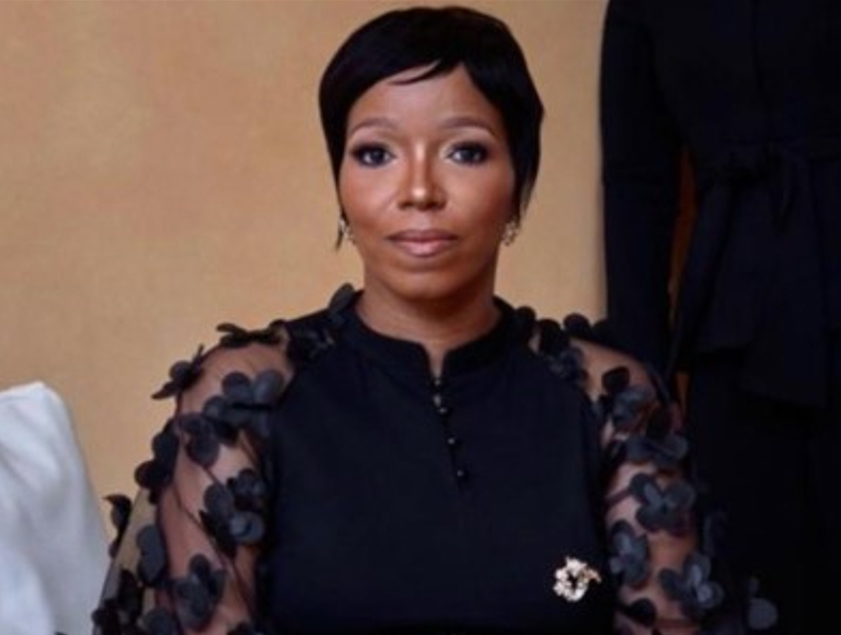
Interview | Masego Khutsoane – Best Contribution To The Reputation Of The Profession

- Who is Masego Khutsoane?
I am a procurement professional, entrepreneur, mentor and advocate for the development of our profession. I have spent approximately 25 years working across procurement, strategic sourcing, technology, public sector institutions and the private sector.
I am the Founder and Managing Director of Procurementor, and the driving force behind Women in Procurement, a platform created to connect, develop and empower professionals in the industry.
Beyond my professional roles, I am passionate about people, mentorship, SMME development and creating opportunities for others to grow. I believe procurement has the power to do far more than secure goods and services. When practised strategically and ethically, it can create business value, enable economic participation and contribute to meaningful change.
Above all, I am a woman of faith who believes that success is not measured only by what you achieve for yourself, but also by what you contribute to the lives and journeys of others.
- How did you land in the procurement space?
Interestingly, I landed in procurement by chance! I studied Information Systems and Management at Rhodes University and initially imagined myself becoming a business analyst or technology strategist.
My first role involved pre-sales and business analysis in a technology environment, where I gained exposure to contracts, negotiations, supplier relationships and stakeholder management. I discovered that I enjoyed the complexity of bringing business needs, commercial considerations and supplier capabilities together.
My next role took me into government, where I was entrusted with establishing and managing an IT sourcing environment as a deputy director at just 23 years old. I was a young Black woman entering a largely male-dominated environment, and I knew I had to demonstrate my capability.
What began as an unexpected career path became a profession I grew to love. Over time, I came to understand that procurement is not simply about buying. It is about strategy, governance, risk, commercial intelligence and influencing decisions that affect an organisation’s performance.
Looking back, what I stumbled into became the foundation of my career, my business and my contribution to the profession.
- What does the award mean for you?
Winning Best Contribution to the Reputation of the Profession at the 7th Annual Pan African Supply Chain Awards is deeply meaningful to me because it recognises something that has always been central to my journey: contributing to the growth, credibility and development of the procurement profession.
For me, this recognition goes beyond my corporate career or the work we do through Procurementor. It speaks to the importance of mentoring emerging professionals, equipping SMMEs, sharing knowledge and creating platforms where people can connect, learn and grow.
Through Women in Procurement, our Procurement Mentorship School and our SMME development initiatives, I have tried to make a contribution that extends beyond my own career.
I am especially grateful to be recognised by industry peers because reputation is built over time through consistency, integrity and the value we bring to others.
I do not see this award as an individual achievement alone. It belongs to the mentors, colleagues, partners, supporters, my team and my family who have been part of my journey. Above all, I give glory to my Lord and Saviour, Jesus Christ.
I receive this award with humility and gratitude, and as encouragement to continue doing the work.
- Where do you see Procurementor in the next decade?
I see Procurementor evolving into a recognised procurement capability and solutions business with a broader African footprint.
My vision has always been to make procurement knowledge, tools and expertise more accessible, whether to large organisations seeking to strengthen their procurement functions, professionals looking to advance their careers, or SMMEs trying to understand how to participate in formal supply chains.
Over the next decade, I want to build on three key areas: procurement advisory and solutions, professional development, and SMME enablement.
I see opportunities to develop scalable learning programmes, practical procurement tools and digital solutions that help organisations improve their procurement maturity while equipping professionals with the skills to navigate an increasingly complex business environment.
I also want to strengthen the reach and impact of Women in Procurement, building a stronger community of professionals who share knowledge, develop one another and influence the future of the industry.
Ultimately, I want Procurementor to become more than a consultancy. I want it to be a lasting institution that builds capability, creates opportunities and contributes to a stronger procurement profession across Africa.
- Why do you feel that other SMMEs should nominate themselves for PASCA?
I believe SMMEs should nominate themselves because the contribution you make does not have to be enormous in scale to be significant in impact.
Too often, small businesses underestimate their achievements because they compare themselves with large corporates. Yet SMMEs are important contributors to economic participation, innovation, employment and the development of local supply chains.
Awards such as PASCA provide an opportunity to showcase the work being done, demonstrate credibility, raise visibility and connect with potential clients, partners and other industry leaders.
For procurement-focused SMMEs in particular, recognition can help challenge the perception that smaller businesses lack the expertise, capacity or strategic value to contribute meaningfully to the profession.
My advice is to tell your story honestly, demonstrate the impact of your work, and provide evidence of the difference you are making. You do not need to be the biggest business in the room to have a story worth telling.
Sometimes, nominating yourself is also an important step in recognising your own contribution. If we want the industry to acknowledge the value of SMMEs, we must be willing to put our work forward and allow it to be seen.
- What has been the biggest challenge you’ve faced as an SMME in the procurement industry, and how did you overcome it?
One of the biggest challenges has been establishing credibility and visibility as a smaller business in an industry where organisations often gravitate towards established brands, large consultancies and businesses with extensive corporate track records.
Procurement is a trust-based profession. Clients need confidence that you understand their commercial environment, can navigate complex governance requirements and will deliver credible, defensible outcomes. As an SMME, you have to demonstrate that value while also managing the realities of building and sustaining a business.
I have learnt that technical competence alone is not enough. You must build relationships, communicate your value clearly, remain consistent and demonstrate the quality of your work. You also have to be willing to keep learning, adapt your business model and create opportunities rather than wait for them.
Through Procurementor, I have worked to build credibility through professional expertise, industry engagement, training, mentorship and the development of Women in Procurement as a platform for knowledge sharing and collaboration.
The journey has not always been easy, but it has taught me resilience and the importance of staying focused on the purpose behind the business.
I have also learnt that you cannot build a sustainable business on visibility alone. You need sound commercial decisions, strong relationships, a clear value proposition and the discipline to keep going even when the results are not immediate.
- Looking back on your journey, what advice would you give to aspiring entrepreneurs and procurement professionals who want to make a lasting impact in the industry?
My first piece of advice is to remain curious and never stop asking why. In one of my earlier interviews, I spoke about the importance of understanding the entire procurement process, developing a passion for governance and learning to distinguish between the procurement function and the assumptions people may hold about it. Those lessons remain relevant today.
To aspiring procurement professionals, I would say, learn the technical fundamentals, understand the commercial environment, build strong stakeholder relationships and develop the confidence to contribute strategically. Do not limit yourself to processing transactions. Understand how your decisions affect business performance, suppliers, risk and the broader economy.
To entrepreneurs, my advice is to be clear about the problem you are solving and the value you bring. Build credibility through your work, understand the commercial realities of running a business, nurture relationships and do not allow the size of your business to determine the size of your ambition.
I would also encourage both groups to invest in other people. Share what you know, mentor someone coming behind you and create opportunities where you can. The three-year journey of the Procurement Mentorship School and the work we continue to do through Women in Procurement have reinforced my belief that our profession becomes stronger when we help others grow.
Finally, understand that success is not always linear. There will be setbacks, disappointments and moments when you question the journey. Learn from them, adjust and keep moving.
For me, lasting impact is not simply about the positions you hold or the awards you receive. It is about the standards you uphold, the people you develop, the opportunities you create and what continues to grow because you were there.